

I originally wrote these notes within the container of a course I was teaching. We were exploring ancient women’s voices that can be connected to Hekate in different ways. Figures like Herais, Aglaonice, and Sosipatra. Even The Pythia lineage as oracles at Delphi. Centering these women matters so much to me, in my personal practice and in my approach to teaching and writing.
Centering all women, all marginalized voices, is important to me. When I discovered the Herais spell in The Greek Magical Papyri - it’s an erotic binding (questionable, I know, but so fascinating) - from one woman to another. It takes Sappho’s poems and blows them open. When I was studying ancient Neoplatonism and in walked Sosipatra, I was amazed. The ancient Pythia, and all of the Sibyls, were powerful women caught up in a maze of patriarchy. How could these fascinating women go largely unnoticed?
I’ve written so much about the mythic women, re-imagining their stories told from their perspective, such as Medea’s prelude in Entering Hekate’s Garden. You can find episodes on Medea, Circe, Medusa and The Sybils on the Keeping Her Keys Podcast.
These notes explore the crossroads of my identity and my approach to scholarship.
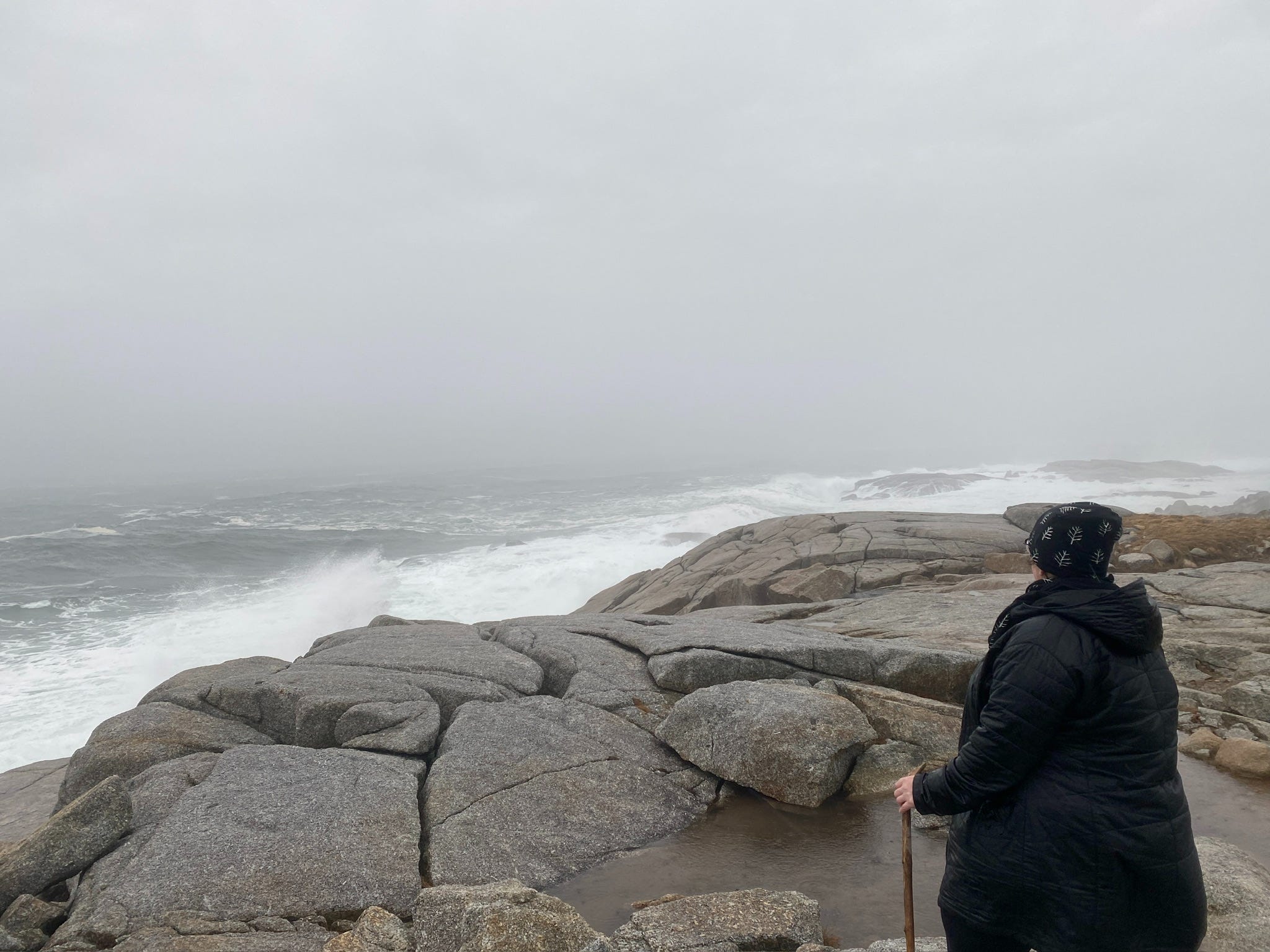
Me, atop High Head, being my intersectional self at the juncture of land, sea and sky. I didn’t get into being differently abled in these notes, but I will in the future. There are many other crossroads in which I dwell. In these notes I discuss the intersection of my identities with my work as a scholar, teacher and writer, who spends a great deal of time immersed in ancient texts related to Hekate and witchcraft.
My Perspective
I come to this work as a feminist lesbian scholar and a modern witch, and I want to be transparent about how this shapes my teaching. For a long time, I wondered if my identity and perspective might somehow compromise my academic credibility or make my interpretations less valid. And, honestly, it did. I sometimes think it still impacts how certain people view my work, even though Modern Hekatean Witchcraft itself is now a subject of scholarly analysis. What I’ve come to understand through decades of study, practice, and engagement with feminist scholarship is that my positionality isn’t a limitation. It’s a strength that allows me to see what others have missed or deliberately obscured.
I’m inviting you to understand the scholarly foundation for my approach and to develop your own critical lens for reading ancient sources and modern interpretations alike.
Important: I am a white woman with a PhD. Obviously, I have immense privilege because of these factors. I was the first person in my family to go to university. My family heritage are economically disadvantaged fishers in rural Nova Scotia, Canada. I fought my way into the middle class with student loans, single motherhood, and chronic illness. I’m writing from my intersections, which should never be interpreted as anything else, nor as a judgment of anyone else. I don’t pretend to speak for groups of which I am not part. I live in rural Nova Scotia, Canada, a place where being a lesbian isn’t an issue. Nobody raises an eyebrow, let alone mistreats us, when we’re out about about. Lesbian. Witch. Fat. Not something that people around here openly criticize.
At times, I’ve felt like I didn’t belong in the world of scholarly inquiry. When I was in the mainstream world of academia, I definitely didn’t fit it. Since I started the Keeping Her Keys block in 2018, there’s been moments when the criticism of my approach got to me. Yet, like Hekate, I abide at my own unique intersection.
The Witch’s Lens: Why Identifying as a Witch Matters
Before we dive into Victorian translation bias and feminist scholarship, I want to address what it means to identify as a witch in the context of this work, and why this identity itself is an act of reclamation and resistance.
The Historical Weight of the Word “Witch”
When we claim the title “witch,” we’re not just choosing a spiritual identity - we’re reclaiming a word that was weaponized against women, healers, midwives, herbalists, and anyone who existed outside patriarchal control. The witch hunts of the early modern period (roughly 1450-1750) weren’t about actual witchcraft. It didn’t start there, the Romans and Greeks were fond of persecuting women whose “magick,” didn’t conform to societal norms. For the most part, they were about controlling women’s bodies, women’s knowledge, women’s power, and women’s sexuality. Men were part of this, but to a much lesser extent. The reasons for men’s inclusion in the witch hunts is beyond these notes, but they were similar to those for women.
The witch was the woman who knew too much: She understood herbs and healing, birth and death, the cycles of nature and the body. This knowledge threatened patriarchal medical and religious authority.
The witch was the woman who refused domestication: She lived alone, or with other women, or outside marriage. She was economically independent, sexually autonomous, or simply too old to be useful to patriarchy.
The witch was the woman who spoke truth to power: She questioned authority, challenged injustice, or simply existed in ways that made those in power uncomfortable.
The witch was often queer: Historical records show that accusations of witchcraft frequently targeted women who lived together, who rejected marriage, or who expressed same-sex desire, though this aspect has been largely erased from mainstream historical narratives.
The estimated death toll from the witch hunts ranges from 40,000 to 100,000 people, with women comprising 75-80% of those executed. But the true impact was far greater: the terror created by the witch hunts effectively silenced women’s spiritual authority, destroyed women’s healing traditions, and severed our connection to pre-Christian goddess worship for centuries.
Podcast episode: Being The Witch in the Room
Reclaiming “Witch” as Sacred Identity
When we identify as witches today, we’re doing several things simultaneously:
We’re honoring those who were murdered: We remember the healers, the herbalists, the midwives, the wise women, the queer folk, the ones who refused to submit. We say their persecution will not be forgotten, and their knowledge will not be lost.
We’re reclaiming women’s spiritual authority: For centuries, patriarchal religions told women they needed male intermediaries to access the divine. Witchcraft says: you are the priestess, you are the ritual leader, you have direct access to sacred power.
We’re reconnecting with pre-Christian goddess traditions: The witch hunts were partly about eradicating the last remnants of goddess worship and women’s mystery traditions. When we work with Hekate, Artemis, Persephone, and other goddesses, we’re rebuilding what was deliberately destroyed.
We’re claiming power outside patriarchal structures: Just as the historical “witch” threatened patriarchal control, the modern witch refuses to seek permission or validation from dominant religious, academic, or social institutions.
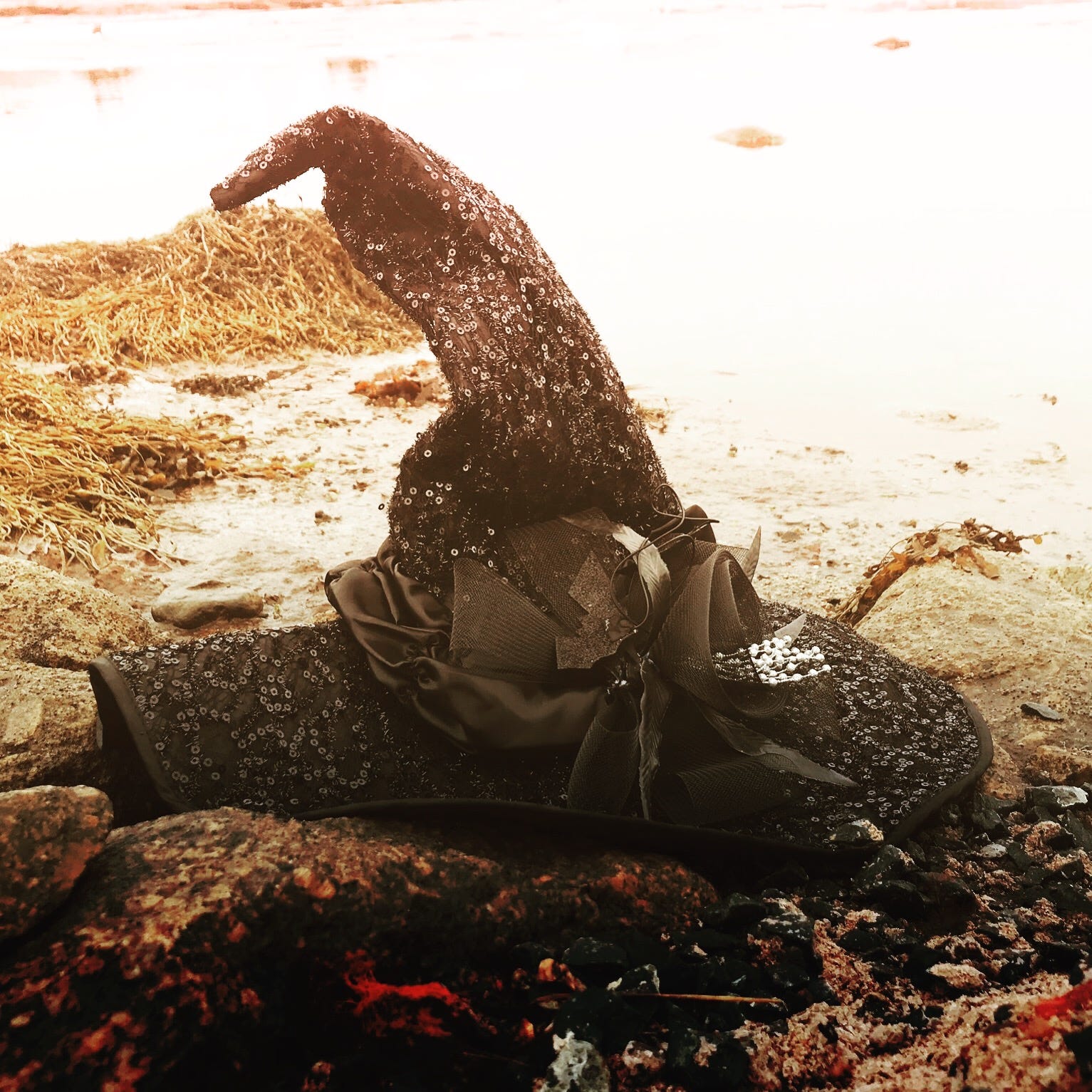
Witch, to me, is a treasure, like the ocean. Like my adoration of sparkly witch hats.
The Rise of Modern Goddess Witchcraft
The modern witchcraft revival didn’t emerge in a vacuum. It grew from several interconnected movements:
The feminist spirituality movement (1970s-1980s): Feminist scholars and practitioners began reclaiming goddess traditions, challenging patriarchal religion, and creating women-centered spiritual practices. Figures like Starhawk pioneered traditions that centered women’s power and experience.
The reclamation of “witch” as feminist identity: The acronym W.I.T.C.H. (Women’s International Terrorist Conspiracy from Hell) was used by feminist activists in the late 1960s. They understood that claiming “witch” was a political act - a refusal to be shamed, silenced, or controlled.
The recovery of ancient goddess traditions: Scholars like Marija Gimbutas, Merlin Stone, and others began documenting pre-patriarchal goddess worship, revealing how these traditions had been suppressed and distorted.
The integration of queer identity and witchcraft: Queer practitioners recognized that witchcraft’s emphasis on personal power, rejection of normative structures, and celebration of the liminal made it a natural spiritual home for LGBTQ+ folk.
This movement wasn’t just about reviving old practices, it was about creating new traditions that honored ancient wisdom while addressing contemporary needs and identities.
My wife, Christen, and I did a podcast episode on Modern Goddess Witchcraft.
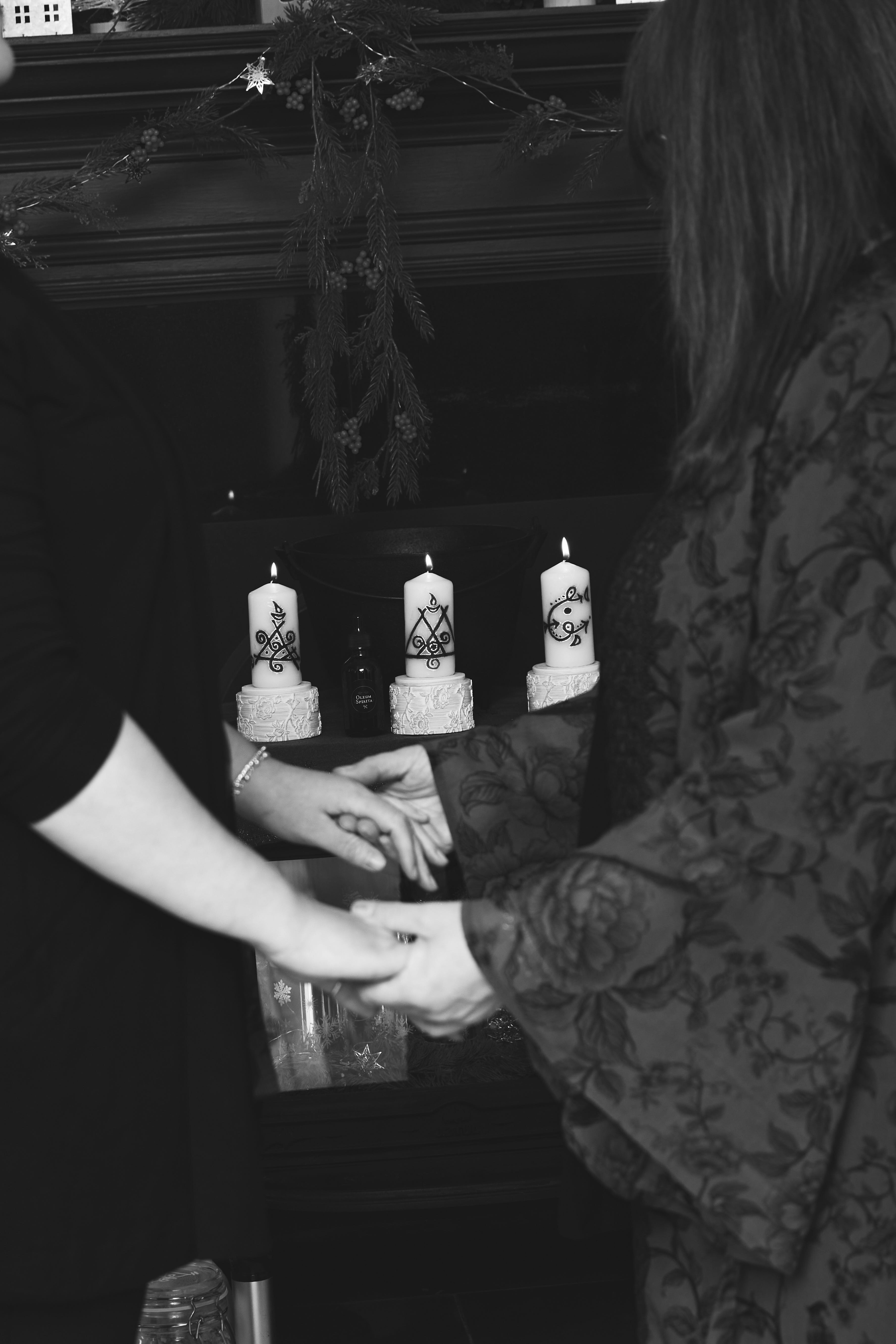
We wrote our own vows, centered in our devotion to Hekate and the divine feminine. After one of the priestesses who married us tried her best to provide us with pagan ceremonies, which felt all too heteronormative to us.
Modern Hekatean Witchcraft: A Living Tradition
The tradition I’m embedded into, Modern Hekatean Witchcraft, stands within this lineage of reclamation and innovation. It’s not an attempt to recreate ancient practices exactly as they were (which is impossible; we don’t have complete records, and we live in a radically different world). Instead, it’s a living tradition that:
Honors historical sources while acknowledging gaps and biases: We study ancient texts, archaeological evidence, and scholarly research, but we also recognize that much was lost, distorted, or deliberately suppressed - especially regarding women’s practices and queer identities.
Centers Hekate as sovereign goddess: We work with Hekate not as a subordinate deity or a “dark goddess” to be feared, but as the powerful, multifaceted, gender-transcendent force she was in ancient sources before Victorian translators diminished her.
Embraces personal gnosis alongside scholarship: We value direct experience and revelation while grounding ourselves in rigorous research. This mirrors the ancient mystery traditions, which always balanced transmitted knowledge with personal initiation.
Welcomes all genders and orientations: Modern Hekatean Witchcraft explicitly affirms queer, trans, and gender-nonconforming practitioners. Hekate herself transcends gender binaries, making this tradition a natural home for those who exist outside normative structures.
Practices ethical cultural engagement: We distinguish between open and closed traditions, respect cultural boundaries, and avoid appropriation while still honoring the interconnected nature of ancient Mediterranean spirituality.
Emphasizes sovereignty and reciprocity: We approach the divine as partners, not supplicants. We claim our power while honoring the power of the gods. We give as well as receive.
This tradition is the result of decades of practice, study, community building, and listening to what Hekate herself reveals through direct experience. It’s also deeply informed by feminist scholarship, queer theory, and the lived experiences of practitioners who have been marginalized by mainstream religions and academic institutions.
Podcast Episode: Abiding at The Crossroads of Gender and Queerness
Why “Witch” Intersects with Feminist Scholarship
Here’s where it all comes together: identifying as a witch and engaging in feminist scholarship are not separate activities. They’re deeply interconnected acts of reclamation.
Both challenge patriarchal authority: Feminist scholarship questions whose voices have been centered in academic traditions. Witchcraft questions whose voices have been centered in spiritual traditions. Both say: the dominant narrative is incomplete and biased.
Both value embodied knowing: Feminist epistemology recognizes that lived experience is a valid form of knowledge. Witchcraft has always valued direct experience, intuition, and gnosis alongside transmitted teaching.
Both reclaim what was suppressed: Feminist scholars recover women’s voices that were erased from history. Witches recover goddess traditions and women’s spiritual practices that were destroyed by patriarchal religions.
Both honor marginalized perspectives: Feminist scholarship centers women’s experiences and increasingly includes queer, trans, and BIPOC voices. Modern witchcraft explicitly welcomes those who have been excluded from mainstream spiritual communities.
Both are acts of resistance: Claiming “witch” is a refusal to be shamed. Practicing feminist scholarship is a refusal to accept biased narratives as objective truth. Both say: we will not be silenced, erased, or controlled.
When I speak as a feminist lesbian scholar who is also a witch, I’m bringing all of these perspectives to bear. My identity as a witch informs how I read ancient sources: I’m looking for the practitioners, the women who worked magick, the ones who were erased or vilified. My identity as a lesbian helps me recognize when queer identities and gender fluidity have been obscured. My identity as a feminist scholar gives me the tools to analyze bias and reclaim suppressed knowledge.
My identity as a witch means I’m living them, practicing them, and allowing them to transform me. This is embodied scholarship. This is what the ancient mystery traditions always required: not just intellectual understanding, but direct experience and personal transformation.
Why This Matters: The Victorian Problem
Now that I’ve examined the weight and significance of claiming “witch” as identity, let’s explore why the Victorian translation bias is so problematic, and why our perspective as modern witches is essential for correcting it.
Most of the translations and interpretations of ancient Greek and Roman texts that we rely on were created during the Victorian era by scholars working within extremely rigid frameworks of gender, sexuality, and morality. These translators were almost exclusively male, Christian, and operating within strict Victorian social codes which inevitably brought their cultural biases to their work. While the Greeks and Romans certainly had their patriarchal structure, these only were amplified by the Victorians. The witch hunts moved from outright persecution to the page.
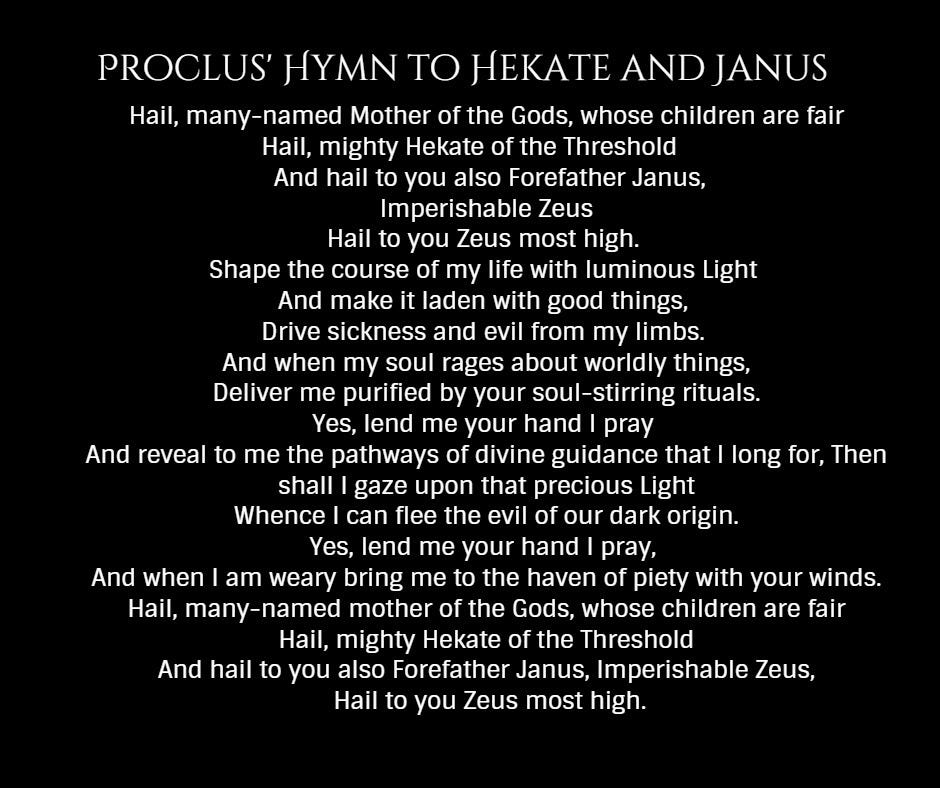
This lives on our fridge, which may sound contradictory given what I’m writing about. To be clear: I’m not anti-male. I adore Proclus. I have two sons. Back to the hymn - the translated use of the word “fair,” has stirred up some controversy when I’ve shared it before, so I looked into the ancient Greek word. It has nothing to do with beauty, skin tone, or even being equitable. A more appropriate modern translation might be “honorable” or “chosen.”
But here’s what makes this particularly insidious for us as witches: the Victorian era was also the height of the “witch as evil hag” stereotype. Victorian scholars weren’t just translating ancient texts - they were actively constructing narratives about ancient “witches” and goddess worship that justified their own cultural prejudices and fears about women’s power.
Scholars like Mary Beard, Sarah Pomeroy, and Emily Kearns have written extensively about how Victorian translators imposed their cultural values onto ancient texts, particularly regarding gender, sexuality, and female power. They sanitized, moralized, and sometimes outright mistranslated passages that didn’t fit their worldview.
What This Means for Our Study of Hekate
Gender fluidity was erased: Ancient Mediterranean cultures had far more fluid concepts of gender and sexuality than Victorian England did. When we encounter deities like Hekate who possess both masculine and feminine epithets, refuse domestication and marriage, exist outside normative structures, the Victorians literally couldn’t see or wouldn’t acknowledge these aspects.
Female power was diminished: Powerful goddesses were often reframed as subordinate, dangerous, or morally questionable. Hekate’s sovereignty and her refusal to submit to Zeus’s authority were downplayed or reinterpreted through patriarchal frameworks.
Mystery traditions were sensationalized: Women’s religious roles and mystery traditions were either dismissed as superstition or portrayed as dark and threatening, rather than as legitimate spiritual practices and sources of power. The Victorian obsession with “evil witches” colored how they translated references to pharmakeia and magical practices.
Queer identities were invisible: Any hint of same-sex relationships, gender variance, or non-heteronormative expressions in ancient texts were either ignored, explained away, or translated into heteronormative frameworks.
“Witch” became a slur: Victorian translators used words like “witch,” “sorceress,” and “enchantress” as pejorative terms, imposing their cultural fear of women’s power onto ancient practitioners who would have understood their work very differently.
Feminist Classical Scholarship: Reclaiming What Was Lost
Since the 1970s, feminist classicists have been systematically re-examining ancient sources and revealing how patriarchal bias (both ancient and modern) has shaped our understanding of goddesses, women’s religious roles, and mystery traditions. Modern translation studies recognize that translation is an act of interpretation shaped by the translator’s cultural context, gender, class, religion, and personal biases. The question isn’t whether we bring our perspective to the work, but whether we’re honest about it and rigorous in our methodology.
Addressing the “Modern Concerns” Criticism
Some might argue that this approach reads “modern concerns into ancient texts.” But this criticism itself reveals bias. Here’s why:
Victorian translators also read their concerns into ancient texts: they just had the privilege of having their interpretations accepted as “objective” or “neutral.” There is no neutral interpretation. There is only interpretation that acknowledges its perspective and interpretation that pretends to be objective while hiding its biases.
All interpretation is situated: the question isn’t whether we bring our perspective, but whether we’re honest about it and rigorous in our methodology. I’m being transparent with you about my lens so you can evaluate my interpretations critically.
Ancient sources themselves support gender fluidity: Hekate’s masculine epithets (Hieros Pyr, Kydimos), her association with gender-bending deities like Hermes, her refusal to marry or be domesticated aren’t modern inventions. They’re in the texts. The Victorians chose to ignore or minimize them.
We have access to better scholarship now: we can read multiple translations, consult contemporary scholars who aren’t bound by Victorian morality, and examine archaeological evidence that wasn’t available to earlier translators.
Modern witches have direct experience: we’re not just studying these traditions academically. We’re practicing them, living them, and receiving direct gnosis from the deities themselves. This embodied knowledge helps us recognize when translations or interpretations don’t ring true to the actual experience of working with these forces.
Why My Perspective - and Yours - Matters
As a lesbian, I’m intimately familiar with how dominant cultures erase, sanitize, or pathologize what doesn’t fit their norms. To be honest, I see this in neopaganism and the “witch world,” from strict gender heteronormative binaries in some traditions to the way that books about queer witchcraft sometimes feel written for anyone but me. Christen and I went on a quest to find lesbians (WLW, sapphics are other contemporary terms) in tarot and oracle decks. We didn’t find many. I have a keen eye for spotting erasure in historical texts and translations as well as modern discourse.
As a witch, I understand what it means to claim power that patriarchal structures want to deny. I know what it’s like to practice spirituality that mainstream religions dismiss or demonize. I recognize the difference between how practitioners understand their own work and how outsiders (especially hostile outsiders) describe it. This helps me read ancient sources with awareness of how women’s spiritual practices might have been distorted by those who feared or opposed them. I not only know that it exists in history, it still thrives today. I have lived it.When I believe that Hekate embodies both masculine and feminine principles, that she refuses domestication, that she exists in liminal spaces outside normative structures, I’m bringing her into my crossroads.
I invite you to bring your whole self to this work. Bring your questions, your skepticism, your lived experience, your embodied knowing. Bring your critical thinking skills and your willingness to challenge assumptions - including mine.
This is sacred work. Not just the work of connecting with Hekate and her companions, but the work of reclaiming what has been lost, revealing what has been hidden, and honoring what has been erased.
Trust your scholarship. Trust your lived experience. Trust your witchcraft. Trust that you have something unique and valuable to bring to this ancient tradition. And know that I’m honored to walk this path with you.
For Further Study
If you want to explore these themes more deeply, I recommend the following resources:
On Victorian Translation Bias
Mary Beard, Women & Power: A Manifesto
Sarah B. Pomeroy, Goddesses, Whores, Wives, and Slaves: Women in Classical Antiquity
Emily Kearns, Ancient Greek Religion: A Sourcebook
On Feminist Classical Scholarship
Amy Richlin, Arguments with Silence: Writing the History of Roman Women
Marilyn B. Skinner, Sexuality in Greek and Roman Culture
Marguerite Johnson, Sexuality in Greek and Roman Literature and Society
Kimberly B. Stratton and Dayna S. Kalleres (Eds.), Daughters of Hecate: Women and Magic in the Ancient World
On Queer Spirituality and Ancient Traditions
Audre Lorde, Sister Outsider (especially “Uses of the Erotic: The Erotic as Power”)
Judy Grahn, Blood, Bread, and Roses: How Menstruation Created the World
Adrienne Rich, “Compulsory Heterosexuality and Lesbian Existence”
On Embodied Knowing and Positionality
Donna Haraway, “Situated Knowledges: The Science Question in Feminism and the Privilege of Partial Perspective”
Patricia Hill Collins, Black Feminist Thought
Gloria Anzaldúa, Borderlands/La Frontera: The New Mestiza
On Witchcraft, Feminism, and Goddess Traditions
Starhawk, The Spiral Dance: A Rebirth of the Ancient Religion of the Goddess
Margot Adler, Drawing Down the Moon: Witches, Druids, Goddess-Worshippers, and Other Pagans in America